
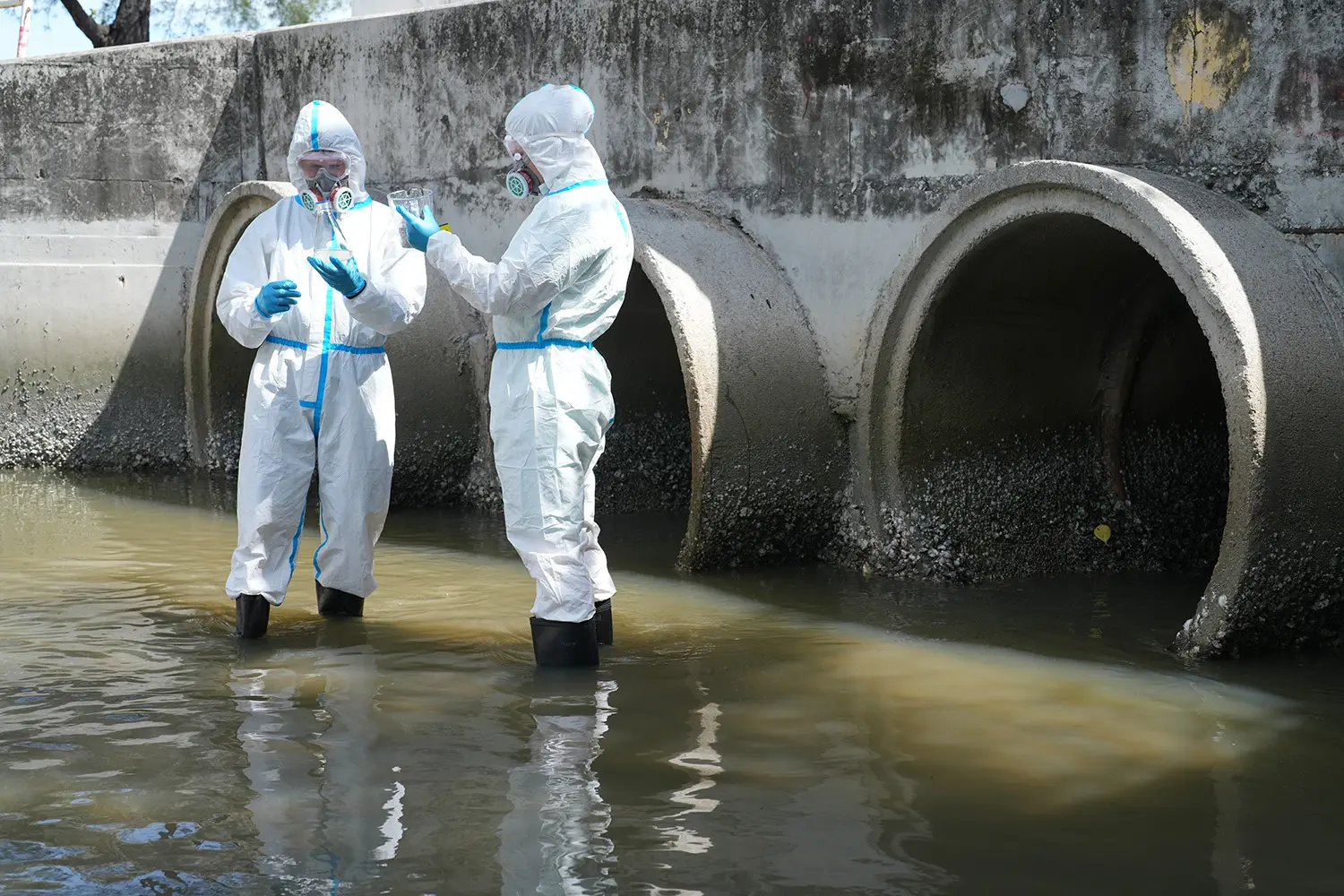
The oil industry has a water problem, and its proposed solution should make all of us uncomfortable.
Every day, oil and gas operations in the Permian Basin of Texas and New Mexico bring nearly one billion gallons of wastewater to the surface. Known as “produced water,” this liquid comes out of oil and gas wells along with fossil fuels. It can contain enormous amounts of salt along with metals, petroleum compounds, chemicals used during drilling and naturally occurring radioactive materials. For decades, the industry’s main answer was to pump much of this waste back underground.
Now even that system is running into trouble.
Years of wastewater injection have increased underground pressure in parts of the Permian Basin and contributed to earthquakes and well blowouts. Texas regulators have responded by restricting underground disposal in some areas. Oil companies are warning that without new places to put the wastewater, oil production itself could eventually be constrained.
That should tell us something important. The industry is not suddenly sitting on a valuable new water resource. It is running out of places to put its waste.
Yet the conversation is rapidly changing from how to safely manage that waste to how we can use it somewhere else. Texas is developing rules that could eventually allow treated produced water to be released into rivers or applied to land. Researchers are experimenting with using it to irrigate crops such as alfalfa. The idea is being presented as a way to turn a problem into a resource, especially in a region where water is scarce.
It sounds wonderfully circular until you ask why the water became waste in the first place.
Oil and gas production requires enormous quantities of water. A U.S. Geological Survey analysis estimated that developing a Permian oil or gas well between 2010 and 2019 directly consumed an average of roughly 4 to 5 million gallons of water. Other research found that hydraulic fracturing accounted for about 35 percent of non-mining water use in the Permian at its 2019 peak, with groundwater supplying most of that demand.
In other words, an industry operating in a dry region withdraws huge quantities of water, uses that water to extract fossil fuels, and simultaneously brings enormous amounts of contaminated formation water to the surface. The resulting waste then becomes another problem requiring pipelines, disposal wells, treatment plants and large amounts of energy.
One new Texas facility illustrates the problem. It uses a process called freeze desalination, which freezes produced water so that cleaner water can be separated from concentrated salts. The plant can process about 420,000 gallons per day, but only about half becomes reusable water. The other half remains concentrated brine that still needs underground disposal. Processing that relatively small amount of water requires about 5.5 megawatts of electricity.
Compare 420,000 gallons with the nearly one billion gallons of produced water generated every day in the Permian, and the scale becomes hard to ignore.
The safer use of treated produced water within the oil industry itself may make sense when it reduces the industry’s demand for fresh water. Turning industrial wastewater into irrigation water or releasing it into rivers deserves a much higher level of caution because once that water leaves the oilfield, any treatment failure can become everyone else’s problem.
California Offers a Warning
For decades, some farms in Kern County have irrigated crops with produced water from conventional oil fields, generally after treatment and blending with other water. California regulators report that crops irrigated this way have included citrus, nuts, grapes, garlic and carrots.
Researchers have studied the practice, and the results are more complicated than either side of the debate sometimes suggests. A 2020 peer-reviewed study found that concentrations of the inorganic substances tested in the low-salinity oilfield water were below applicable drinking-water and irrigation standards. Researchers also examined naturally occurring radioactive materials and did not find evidence of concerning accumulation in the tested crops and soils.
But the same research found higher levels of boron and sodium in soils receiving oilfield water and warned that long-term use could eventually cause toxicity problems. California regulators have continued studying which chemicals should be monitored because produced water is not one uniform substance. Its chemistry varies by oil field, extraction method and treatment process.
That uncertainty matters.
Texas researchers recently found encouraging results when treated produced water was used on alfalfa, but the researchers themselves described the findings as preliminary because the experiment covered only one growing season. They recommended multi-year studies to understand what happens after repeated irrigation. Another 2026 study pointed to remaining gaps in our understanding of treatment reliability, water chemistry and toxicity under real-world conditions.
Yet pressure is building to establish rules now because the oil industry needs somewhere for the water to go.
That is exactly where a possible solution starts looking like a false solution.
The sensible order should be science first, regulation second and large-scale use third. Instead, there is a danger of reversing that order because maintaining oil production has become the urgent priority.
Who Pays for the Consequences?
There is also a larger question hiding underneath the technical debate. If the oil industry consumes water and creates a waste stream so enormous that Texas is running out of underground disposal capacity, perhaps the problem is not simply that we haven’t invented enough ways to reuse the waste. Perhaps the scale of extraction itself deserves scrutiny.
Companies collect the revenue when oil comes out of the ground, but communities live with the depleted aquifers, disposal wells, earthquakes, spills, abandoned infrastructure and long-term environmental risks. If contaminated water is eventually released into rivers or spread across farmland, those risks move even farther beyond the oilfield.
Treating wastewater is useful. Reducing freshwater consumption is necessary. Reusing produced water inside oil and gas operations instead of consuming more freshwater may be an improvement.
But turning an oil industry’s waste problem into our irrigation water before we fully understand the consequences is something else entirely.
Water should not have to become an industrial experiment simply because the oil industry is running out of places to put its waste.
- Insurance Journal / Texas Tribune / Inside Climate News. “Texas Oil Industry Running Out of Space to Dispose Wastewater.” August 25, 2026. Read source
- U.S. Geological Survey. “Estimates of Water Use Associated with Continuous Oil and Gas Development in the Permian Basin, Texas and New Mexico, 2010–19.” Scientific Investigations Report 2021-5090. Read source
- U.S. Geological Survey. “Estimates of Water Use Associated with Continuous Oil and Gas Development in the Permian Basin, Texas and New Mexico, 2010–19, with Comparisons to the Williston Basin, North Dakota and Montana.” Read source
- Kondash, A.J., Redmon, J.H., Lambertini, E., et al. “The Impact of Using Low-Saline Oilfield Produced Water for Irrigation on Water and Soil Quality in California.” Science of the Total Environment, Vol. 733, 2020. Read study
- National Library of Medicine / PubMed. “The Impact of Using Low-Saline Oilfield Produced Water for Irrigation on Water and Soil Quality in California.” View study record
- California State Water Resources Control Board. “Water Quality in Areas of Oil and Gas Production: Oil Field Produced Water.” Read source
08/30/2026 – This article has been written by the FalseSolutions.Org team
Share this