
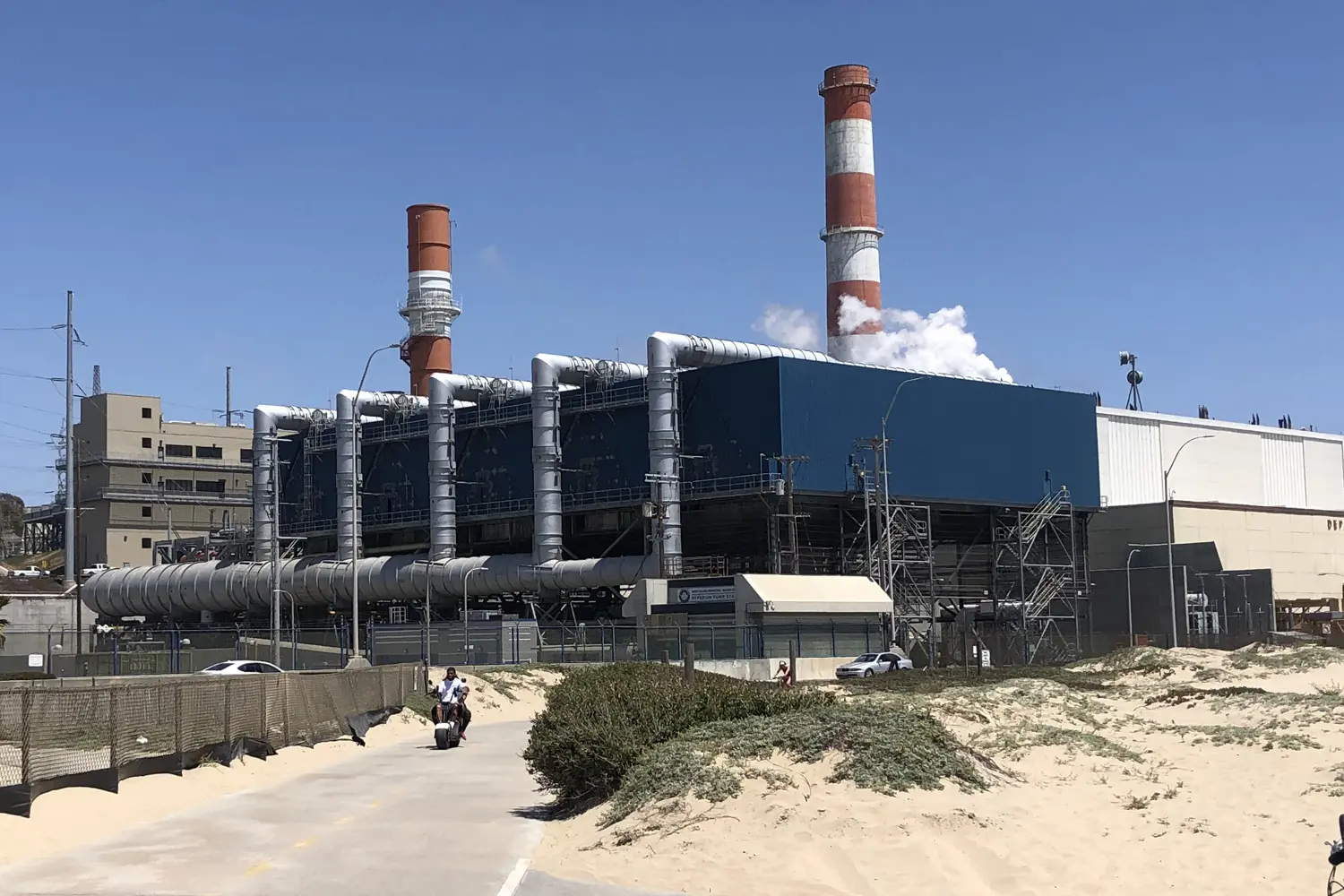
Los Angeles is preparing to spend hundreds of millions of dollars modernizing the Scattergood Generating Station with new combustion turbines under a reassuring name: the “Green Hydrogen-Ready Modernization Project.” It sounds like Los Angeles is replacing an old fossil-fuel power plant with clean technology.
Look closer, and the future looks remarkably similar to the past.
The new Scattergood plant will still use combustion turbines. They will be capable of burning natural gas mixed with hydrogen, but LADWP admits that the infrastructure needed to produce, deliver and store enough green hydrogen for the project does not exist today. The utility says it hopes sufficient hydrogen will be available when the plant is fully commissioned around the end of 2029, while the hydrogen supply system itself will be studied and approved separately.
In other words, Los Angeles is committing ratepayer money to the power plant first and figuring out its promised clean fuel later.
That gamble looks even stranger because California’s planned hydrogen economy has been moving in the opposite direction. The federal government terminated its commitment of up to $1.2 billion for California’s ARCHES hydrogen hub, which was supposed to help build a statewide network of hydrogen production, transportation and users. California is challenging that cancellation in court, but ARCHES paused its hub activities after the funding disappeared.
Another major piece has also fallen apart. SoCalGas envisioned Angeles Link as a massive pipeline system carrying renewable hydrogen into the Los Angeles Basin. The company sought hundreds of millions of dollars for the next development phase, much of it through customer rates. After regulatory resistance to putting those costs on ratepayers, SoCalGas shelved the project.
So the hydrogen hub is paused, the proposed hydrogen pipeline has been shelved, and Scattergood still has no identified system supplying its green hydrogen. Yet the combustion plant keeps moving forward.
The words “hydrogen-ready” make that possible. They describe what the equipment might burn someday, not what it will actually burn when the hydrogen is unavailable. The turbines can still run on natural gas.
But even if plentiful green hydrogen suddenly appeared, there is a bigger question: Why make electricity into hydrogen just to burn the hydrogen to make electricity again?
Green hydrogen is generally produced through electrolysis, using electricity to split water into hydrogen and oxygen. That hydrogen must then be compressed or otherwise handled, transported and stored before eventually being burned in a turbine to generate electricity again. Energy is lost at every step.
Hydrogen may make sense for some industries that are difficult to electrify directly, but using renewable electricity to manufacture hydrogen and then burning it to produce electricity again is an inefficient way to return electricity to the grid. Hydrogen combustion can also create nitrogen oxides, or NOx, air pollutants that contribute to smog and respiratory problems.
Meanwhile, solar power, batteries, transmission improvements, energy efficiency and demand management use electricity much more directly. LADWP argues that Scattergood provides something those resources cannot yet fully replace: dependable local generation that can start when renewable generation, storage or transmission is unavailable. That reliability question deserves serious consideration.
But calling a new combustion plant “green hydrogen-ready” does not answer it.
Los Angeles is making the permanent investment now while much of the supposedly clean fuel system remains hypothetical. If green hydrogen eventually becomes abundant, affordable and practical, LADWP will have turbines ready to burn it.
If it doesn’t, Los Angeles will still have something very familiar.
A gas power plant.
Sources and references
- Los Angeles Department of Water and Power — Scattergood Generating Station Units 1 and 2 Green Hydrogen-Ready Modernization Project
LADWP’s official project page, including its description of the proposed generating units, hydrogen capability, project timeline and the current lack of hydrogen production, delivery and storage infrastructure.
LADWP: Scattergood Green Hydrogen-Ready Modernization Project - Los Angeles Times — “L.A. says it will clean up its biggest gas power plant. Environmentalists aren’t buying it.” — September 10, 2026
Reporting on the Scattergood modernization project, the uncertain hydrogen supply, the project’s potential continued reliance on natural gas, the ARCHES funding loss and the fate of Angeles Link.
Los Angeles Times: Scattergood and the uncertain hydrogen future - California Public Utilities Commission — SoCalGas Angeles Link Phase 2
CPUC materials concerning SoCalGas’ proposed Angeles Link hydrogen infrastructure project and the costs the utility proposed recovering from customers.
CPUC: SoCalGas Angeles Link Phase 2 - State of California — California challenges termination of hydrogen hub funding
California’s response to the federal government’s termination of funding for the ARCHES hydrogen hub and the state’s legal effort to restore the funding.
California: ARCHES hydrogen hub funding - U.S. Department of Energy — Hydrogen and Fuel Cell Technologies Office
Technical background on hydrogen production, storage, transportation and energy use.
U.S. Department of Energy: Hydrogen and Fuel Cell Technologies
09/25/2026 – This article has been written by the FalseSolutions.Org team
Share this