
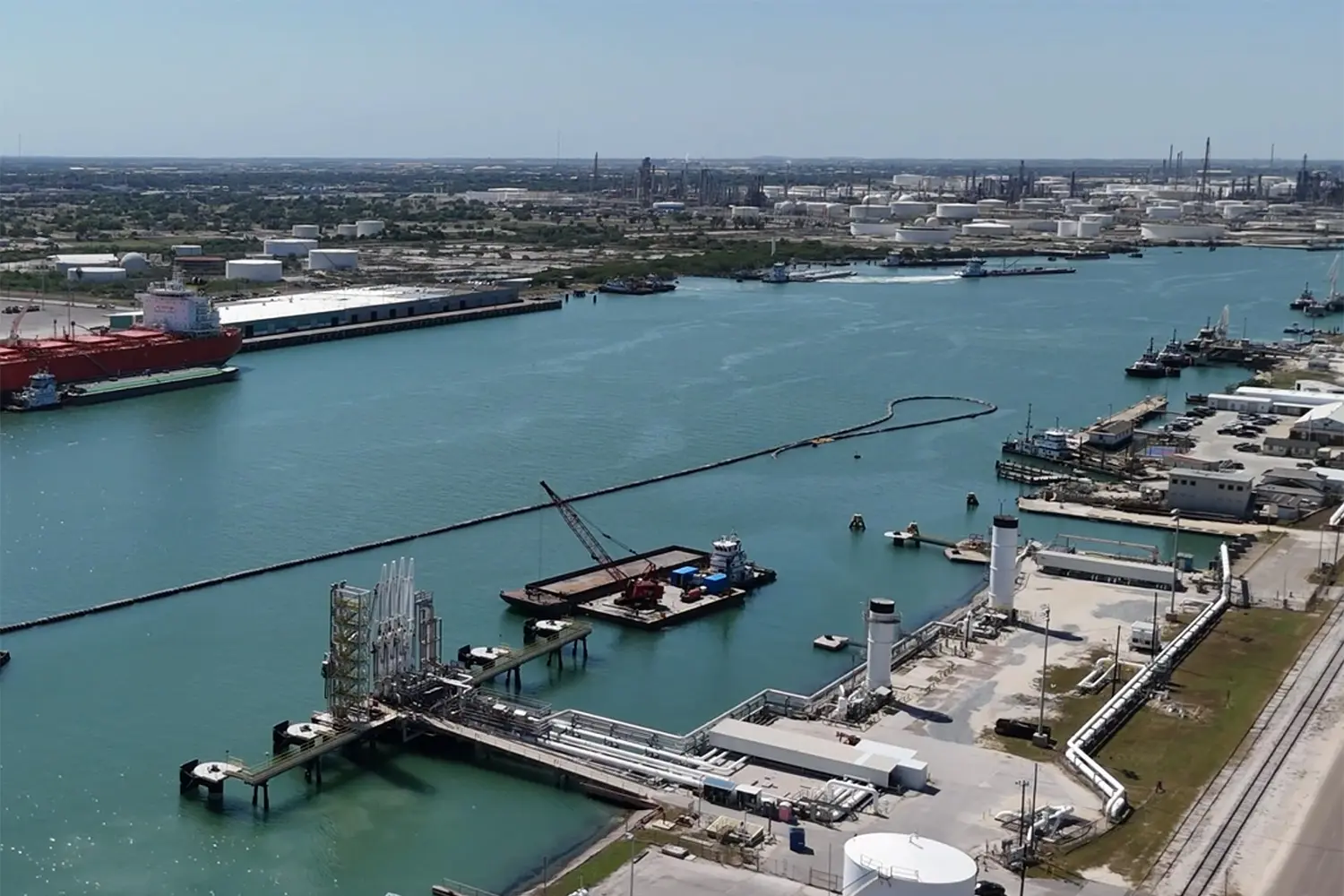
Three months ago, we wrote that Corpus Christi’s billion-dollar desalination project had crawled back out of the grave. Apparently, local residents remembered where they left the shovel.
On September 1, the Corpus Christi City Council voted 5 to 3 against moving forward with the Inner Harbor Desalination Project, once again stopping a project that has consumed years of planning, political attention and public money. The proposed plant would have turned seawater into drinking water by removing salt and other minerals, producing about 30 million gallons of fresh water per day. Its latest preliminary price was nearly $979 million.
This was not a project sitting on a drawing board. It was fully permitted, about 60 percent designed and backed by hundreds of millions of dollars in state financing. Texas officials wanted it built, and Gov. Greg Abbott had previously suggested that the state might need to “micromanage” Corpus Christi after the council rejected the project in 2025. Before the latest vote, Abbott’s chief of staff publicly urged council members to move forward.
They said no anyway.
For people who have spent years fighting the Inner Harbor plant, that is worth celebrating. It is also worth understanding why this fight keeps coming back, because the desalination plant was never really the root of Corpus Christi’s water problem.
Who Is Using All the Water?
Corpus Christi has been struggling through a severe drought, and earlier this year the situation looked frightening. Reservoir levels had fallen so low that officials were preparing for a possible water emergency. Summer rains changed the immediate picture dramatically, raising the city’s combined reservoirs from about 15 percent six months earlier to roughly 48 percent by the time of the September vote. That bought the city time, but current projections still point toward another water emergency around fall 2028.
The city therefore needs more reliable water supplies, but that simple statement leaves out the most important part of the story.
Roughly 20 large industrial companies account for about 60% of Corpus Christi’s water demand.
Think about that for a moment. This is not simply a story about families taking showers, watering lawns and washing dishes in a drought-stricken Texas city. A relatively small group of large industrial users consumes most of the water.
For years, Corpus Christi encouraged the expansion of refineries, liquefied natural gas facilities and other water-intensive industries around the bay while promising that enough water would be available. As industrial demand grew, the city increasingly found itself searching for expensive new supplies.
That is where the idea of desalination starts looking less like a solution to a natural water shortage and more like a subsidy for continued industrial growth.
The Billion-Dollar Question
Desalination sounds wonderfully simple. Corpus Christi sits beside an enormous body of saltwater, so why not remove the salt and use it?
Unfortunately, turning seawater into drinking water requires expensive equipment and large amounts of energy. It also creates highly concentrated salty wastewater called brine, which must be discharged somewhere. Opponents of the Inner Harbor project have long worried about what that discharge could do to Corpus Christi Bay and its marine life.
Then there is the question of who pays.
When council members considered reviving the project earlier this summer, some were frustrated that the water department had not secured contracts committing major industrial customers to buying the plant’s water. Council member Eric Cantu questioned why the city should spend so much without guarantees that refineries would remain customers rather than find their own water supplies.
That gets remarkably close to the heart of the issue.
If industrial expansion creates much of the demand for new water, residents should not automatically be handed the bill for infrastructure built to satisfy that demand.
Killing the Project Does Not End the Water Crisis
Rejecting Inner Harbor does not mean Corpus Christi can stop worrying about water. The city is pursuing a much larger collection of projects, including groundwater wells, reclaimed wastewater and other desalination proposals. Its plans include an Evangeline groundwater project designed to provide as much as 24 million gallons per day, additional groundwater well fields and reclaimed water projects.
Some of those alternatives may make more sense than Inner Harbor, but every new source deserves the same basic questions: Who needs the water? Who benefits from it? Who pays for it? What happens to the environment when we take it?
Groundwater, for example, is not an unlimited underground reservoir waiting to be tapped. Pump too much water too quickly and wells can decline, aquifers can be depleted and nearby farmers and rural communities can be affected. Even the city acknowledges that groundwater development must consider those long-term users.
Corpus Christi therefore still has difficult decisions ahead.
That is what makes the September vote more important than another chapter in a long political fight over one desalination plant. Residents demonstrated that a massive infrastructure project does not become inevitable simply because millions of dollars have already been spent, permits have been issued and powerful people want it built.
The Inner Harbor desalination zombie has been knocked down again, but the conditions that keep bringing it back are still alive. As long as Corpus Christi continues expanding industrial water demand without asking whether its existing water supply can support that growth, politicians will keep searching for another billion-dollar project to make the numbers work.
Maybe the real water solution is not always finding more water.
Sometimes it starts with asking who is using the water we already have.
Previous False Solutions Coverage
Our earlier coverage follows how the Inner Harbor proposal and Corpus Christi’s larger industrial water problem developed:
- The Desalination Zombie Returns to Corpus Christi
- The Water Crisis in Corpus Christi Is Becoming a Subsidy for Industry
- Corpus Christi Halts Inner Harbor Desalination
- Corpus Christi’s Desalination Gamble
- The Price of Saltwater
- Why Corpus Christi’s Inner Harbor Desalination Project Is a False Solution
- Water-Guzzling Industries Are Draining Texas
Reference Sources
- The Texas Tribune: Corpus Christi again rejects desalination plant, September 1, 2026
- The Texas Tribune: Corpus Christi delays decision on desalination plant, June 3, 2026
- The Texas Tribune: Texas governor candidates spar over Corpus Christi water woes, June 11, 2026
- City of Corpus Christi: Regional Water Supply Update
- City of Corpus Christi: Water Supply Updates and Project Information
09/08/2026 – This article has been written by the FalseSolutions.Org team
Share this